Mini Excavator vs Skid Steer: Which One Does Your Property Actually Need?
Both of them move dirt. Only one of them digs. And if you already own a tractor with a loader on the front, the honest answer gets a lot simpler than the dealer websites make it sound.
01The Short Answer
If the jobs on your list start with the words dig, trench, bury or pull out, buy the excavator. If they start with carry, load, spread, push or haul across the yard, that is skid steer work.
That sounds too simple, and for most people it is not. Here is the part that makes it simple: a skid steer is a loader. It picks things up and carries them. It can dig, the way your pickup can tow a camper — it will do it, badly, and you will wish you had the right thing. An excavator is a digging machine. It can move material, the way a wheelbarrow can, one bucket at a time, swinging instead of driving.
So the question is not which machine is better. It is which half of the work you cannot do any other way right now. Most people with acreage can already push and carry a little, because they own a tractor. Almost nobody can dig. That is the whole argument, and the rest of this page is why.
02What Each One Is Actually Built To Do
Watch the two machines work and the difference is obvious in about thirty seconds.
The skid steer drives at the pile, scoops, backs up, drives somewhere else, dumps. Everything it does happens in front of it, and it moves its whole body to do the work. That is why it is fast at moving material and why it needs room to operate — to turn around in a tight spot it needs about its own length of clear ground.
The excavator plants itself, puts the blade down, and works without going anywhere. The house spins on top of the tracks, so it can dig a hole in front of it and put the dirt behind it without moving an inch. It digs down below where it is sitting, which a loader fundamentally cannot do. Reach and depth are the two things it owns outright, and how far down and how far out your machine actually gets is worth knowing before you buy either one.
The tell is the bucket. A loader bucket is wide and shallow, shaped to hold a lot of loose stuff. An excavator bucket is narrow and deep with teeth on it, shaped to break ground and pull. Those two shapes are not interchangeable and neither are the machines.
03You Probably Already Own Half a Skid Steer
This is the part the comparison articles leave out, because they are written for contractors who own neither machine.
If you have ten or twenty acres, odds are there is already a tractor in the barn with a loader on the front of it. That loader scoops, carries, lifts, spreads gravel, moves round bales, drags a pile of brush and pushes snow. It is slower than a skid steer and it will not run a mulching head, but it covers the same job description: pick things up, put them somewhere else.
So when you price a skid steer, you are not buying a capability you are missing. You are buying a faster, more nimble version of a capability you already have — and giving up the three-point hitch, the PTO and every implement you already own to get it. That is a lousy trade for most property owners, and it is the reason so many people who ask this question end up with the excavator.
What the tractor cannot do is dig a trench with vertical walls, reach down eight feet, pull a stump out by the roots, or work with the bucket pulling toward the machine instead of pushing away from it. If that list is why you are shopping, you already have your answer.
04Access Decides This More Often Than the Work Does
People pick the machine by the job list. They should pick it by the narrowest thing it has to get through.
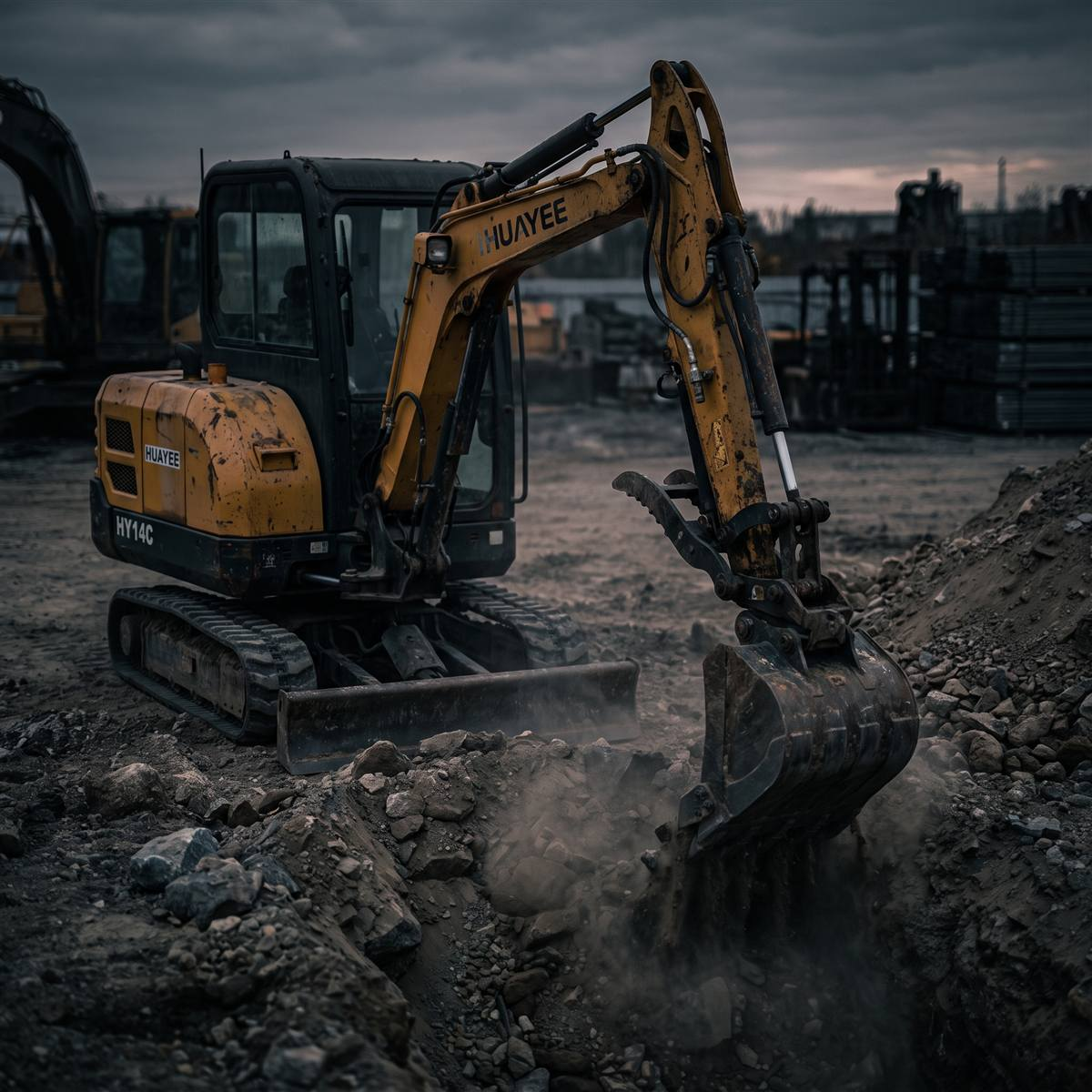
A one-ton mini excavator is commonly under three feet wide across the tracks. Skid steers are built around a wide stance for stability with a load out front, and they are generally too wide for a residential side gate. If the work is behind the house and the only way in is between the fence and the air conditioner, the comparison is over before it starts.
It is not only width. The excavator can work in a hole barely bigger than itself because it does not drive while it digs. A skid steer has to shuttle — forward to the pile, back out, turn, dump — and all of that takes clear ground. Whether a machine fits in your backyard at all is worth settling with a tape measure before you settle anything else, and the tracks, not the bucket, are the thing that has to fit through the gate.
05What Each One Does To Grass You Want To Keep
Both will mark a lawn. One of them is far more likely to wreck it.
Skid steers are named for how they steer. They have no steering — they drag one side against the other to turn, and that scrubbing is what tears sod. A tracked loader is gentler than a wheeled one, but any skid turn on soft ground leaves a scar. An excavator turns the same way, so it is not immune, but it spends most of its working life parked. The tracks sit still, the house spins, and the grass under it survives.
The practical version: on a finished lawn, an excavator damages a path and a work area. A skid steer damages everywhere it had to turn around, which is most of the yard. Plywood or mats under the tracks help both, and are cheap compared to resodding.
06Where the Skid Steer Wins Outright: Attachments
If you want one machine that does twenty different jobs, the skid steer is the honest answer and it is not close.
The skid steer attachment world is enormous because the mounting plate is standardised and everybody builds to it. Pallet forks, mulching heads, brooms, snow blowers, trenchers, concrete breakers, post drivers, stump grinders, tillers, bale spears. Walk into any rental yard and the wall is full of them.
Mini excavator attachments are a shorter list and a fussier one. There is no single standard — pin sizes and coupler patterns vary by machine, which is why working out whether a given attachment will physically fit your machine is its own job, and why matching flow and pressure to the attachment matters before you buy one. The useful ones are buckets, a thumb, an auger, a breaker, a grapple and a brush cutter. That covers most property work, but it is six things, not sixty.
So if the dream is one machine plus a wall of attachments, that dream is a skid steer. If the dream is a machine that digs holes and you will rent the specialty tool twice a year, that is an excavator.
07The Difference Nobody Puts In These Comparisons
You get into a skid steer through the work area. You get into an excavator from the side, away from everything that moves.
On a skid steer the lift arms run up both sides of the operator and the bucket sits right in front of the door. Climbing in and out means passing through the space those arms travel in. The NIOSH alert written specifically about skid-steer loaders is built around that hazard — workers being caught between the lift arms or bucket and the frame, often while servicing the machine or getting in and out of it. That is a design characteristic, not a brand problem, and every skid steer has it.
An excavator has its own ways to hurt you, and the counterweight swinging behind you is the big one. But you board it from the side and the boom works out front where you are looking at it. For somebody who will be the only person on the property, alone, with nobody to lift a lift arm off them, that difference is worth weighing. The habits that keep an excavator from hurting you are worth reading either way.
08What About a Backhoe, or a Backhoe On the Tractor You Own?
A backhoe digs. So the comparison is real, and the answer comes down to how it is attached.
A tractor-mounted backhoe is tempting because you already own the tractor. It digs, it is cheaper than a machine, and it stores on a pallet. What you give up is everything the house rotation buys you. A backhoe swings through a limited arc and the tractor has to be repositioned constantly. The stabilisers have to be set and reset every time you move. And you are reaching over the back of a machine that was not designed around the digging.
A real tractor-loader-backhoe — the yellow kind — is a genuinely capable machine and splits the difference. It is also big, heavy, wide, and hard on a lawn, and you will not get it between the house and the fence.
Rule of thumb that holds up: for occasional holes on open ground where you already own the tractor, a backhoe attachment is reasonable. For anything repetitive, anything tight, or anything deep, the excavator does in an hour what the backhoe does in three, and it does not chew the yard getting there.
09Buying It, Running It, and Getting Rid of It
We are not going to print price tables here. They date in a season and they vary by region. What does not change is the shape of the costs.
On the buying side, the import market has tilted hard toward excavators. You can buy a new one-ton machine delivered for less than a decent used pickup, which is the whole reason this site exists. There is no equivalent flood of cheap imported skid steers, so a skid steer usually means the used name-brand market at used name-brand money.
On the running side, the big recurring number on either machine is the undercarriage, and what a set of rubber tracks costs when they finally go is a real line item. A skid steer on wheels trades that for tyres, which are cheaper. A tracked skid steer has the same undercarriage bill as an excavator and works it harder, because it is driving all day instead of sitting still. The full running cost picture for a mini excavator is laid out separately.
On the selling side, both hold value reasonably if you keep the hours honest and the machine clean, though what an off-brand machine is actually worth second hand is a different conversation to what a name brand is worth.
And the option everybody skips: rent the one you need less often. A day on a skid steer two or three times a year costs a fraction of owning one, and the arithmetic on renting versus buying works the same both directions.
10What I Would Do
Buy the excavator. Rent the skid steer the two or three days a year you need one. That is the answer for most people reading this, and here is when it is not.
Buy the excavator if your list has trenches, footings, a pond, stumps, a septic repair, drainage, or anything behind a gate. Buy it if you already own a tractor with a loader, because you are filling a hole in your capability instead of duplicating one.
Buy the skid steer if the honest truth is that you move material all year — gravel, mulch, manure, snow, bales — you have open ground to work in, you want the attachment catalogue, and digging is the rare job you would hire out anyway.
Buy neither if you have one big project and no second one behind it. Hire it done or rent for a weekend. There is no shame in that and it is frequently the cheapest way to get the work finished. We say the same thing about the whole list of property projects people buy these machines for.
If you have landed on the excavator, the next question is size, and the trailer in your driveway decides more of that than your acreage does. Start with what size machine you actually need, then look at which of the machines you can actually buy are worth the money.