Mini Excavator Hydraulic Problems: Leaks, Weak Power and Heat
Mini excavator hydraulic problems are the number one complaint on budget machines, and they are also the most misdiagnosed. Weak hydraulics usually is not a dying pump. Here is how to read what the machine is telling you, in the order a sensible person would check it.
01Mini Excavator Hydraulic Problems: Start Here
Most hydraulic complaints come down to three cheap things, and people skip all three.
Before you start reading about pumps and valves, check the oil level with the machine cold and on flat ground. Low oil causes weak power, heat, noise and foaming, which between them account for almost every symptom described further down this page.
Then check the filter. A clogged hydraulic filter starves the system, and it is simultaneously the cheapest part on the machine and the most likely single answer to your problem.
Third, consider the temperature. If the machine has been digging hard for two hours in July, what you are calling weak hydraulics may simply be physics rather than a fault.
A large share of “my hydraulics are failing” turns out to be one of those three. Rule them out before you spend a dime, because everything below this point is more expensive.
02Weak or Slow Hydraulics
The most common complaint, and rarely the most expensive cause.
Weak hydraulics means the machine still moves, but without the force or speed it used to have. Work through the causes in cost order, cheapest first, because the cheap ones are also the most likely.
Low oil comes first, always, because the pump is drawing air along with fluid. A clogged filter is next, since restriction on the suction or return side starves everything downstream of it. Then consider the fluid itself — thin, overheated or contaminated oil will not carry load properly.
Cold oil deserves a mention because it worries people unnecessarily. A machine that feels weak for the first ten minutes on a cold morning and fine afterwards is behaving completely normally.
Beyond those, you are into genuine wear. Internal leakage happens as pumps, valves and cylinder seals age, letting fluid slip past internally instead of doing work, and the machine feels progressively tired rather than suddenly broken. A relief valve set low or failing produces similar symptoms, but that is not a homeowner adjustment — it needs a gauge and somebody who knows the specification.
A diagnostic that costs nothing: is it weak on everything, or just one function? Weak across the whole machine points at oil, filter or pump. Weak on one function only points at that circuit — a cylinder, a hose, or a valve section. That single question saves hours.
03It Fades When It Gets Hot
Strong for an hour, sluggish by the afternoon. This is the classic budget-machine complaint.
Heat is the common thread behind most of what goes wrong down here, and hot oil degrades faster than most owners realise. Caterpillar’s maintenance guidance on hydraulic fluid condition and cooling is worth a read on this point — fluid that has been cooked once never fully recovers, and it takes the seals with it on the way out.
Hydraulic oil is meant to run somewhere around 140–180°F in normal work. Push past that and the oil thins, internal leakage climbs, and the machine gets progressively weaker the longer you run it. Common causes, in order of how often they turn out to be the answer:
| Cause | What to do about it |
|---|---|
| Radiator or oil cooler packed with dirt, mud, chaff | Blow it out from the fan side. The single most common cause, and free to fix. |
| No hydraulic cooler fitted at all | A design limit on some budget machines. Work in cooler hours, take breaks. |
| Low oil | Less fluid means less thermal mass. Top up. |
| Overfilled oil | Also causes heat. More is not better. |
| Restriction from undersized hoses or couplers | Especially with aftermarket attachment plumbing. Restriction makes heat. |
| Worn components leaking internally | Energy that does not move the boom turns into heat. |
Check the cooler before anything else. A radiator or oil cooler packed with dust is the most common overheating cause on compact machines and costs nothing but ten minutes with compressed air. Blow from the fan side outward so you push debris back out the way it came. We cover heat in more depth in our guide to maintaining one of these machines.
04Mini Excavator Hydraulic Problems: Leaks and Where They Start
Not all leaks are equal. Learn the difference between a film and a failure.
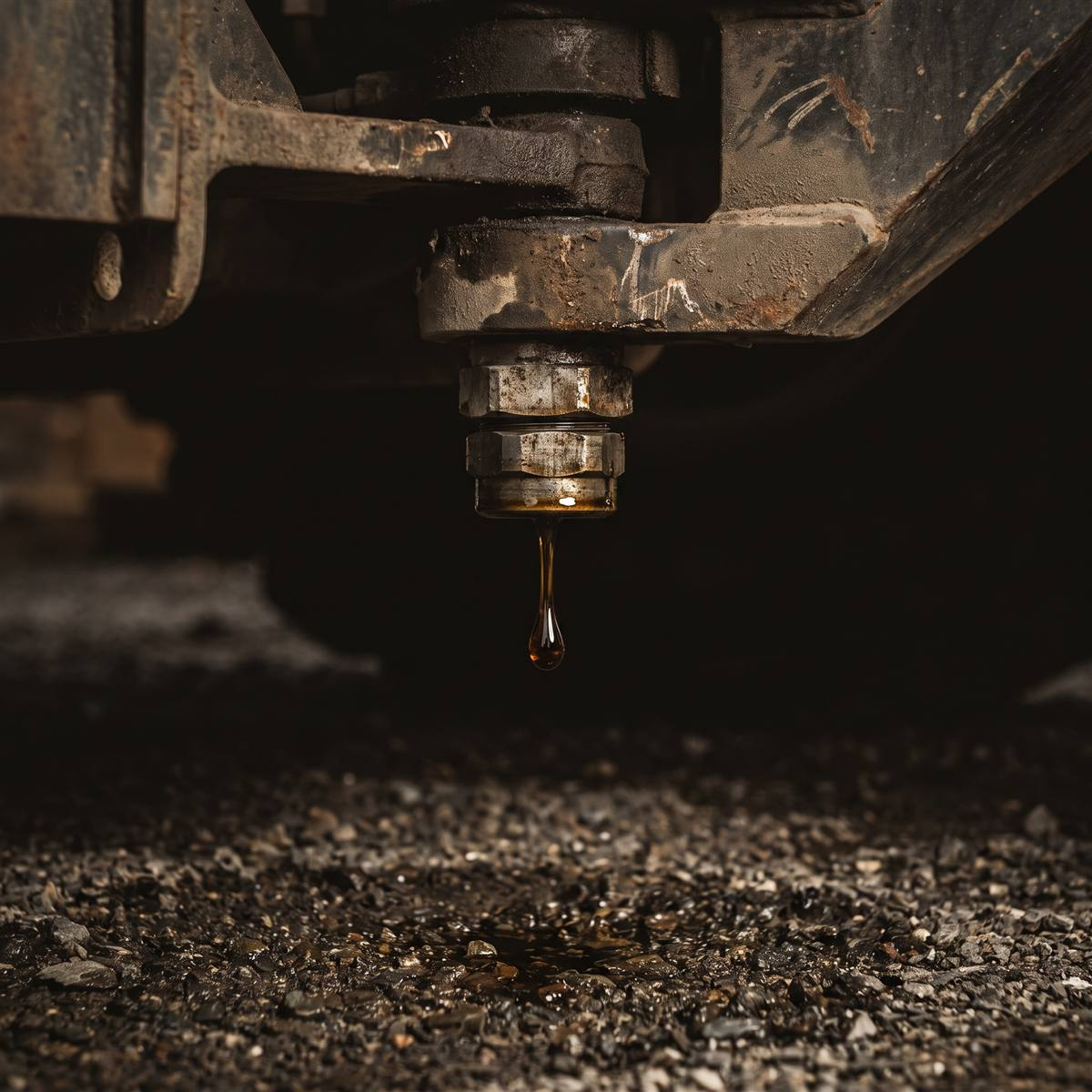
A damp film on a cylinder rod is often perfectly normal, because rods carry a microscopic film of oil by design. Drips that form and fall are different — that is a seal that has given up, and cylinder seal kits are available and within reach if you are handy.
Weeping at a fitting is usually the easiest win on the whole machine. Shipping vibration backs fittings off, particularly on a new machine, and a correct re-torque frequently solves it entirely.
A hose that is wet along its length is failing at the hose rather than the fitting, so replace it. Hoses are generic and any hydraulic shop will build one while you wait.
Oil around the final drive is a different animal altogether. That is gear oil rather than hydraulic fluid, and it points at the undercarriage and travel motor instead.
Never find a pressurised leak with your hand. Hydraulic fluid escaping a pinhole can inject through skin and cause an injury that looks minor and is not — it is a genuine surgical emergency. Trace a suspected leak with a piece of cardboard, machine off and pressure released.
Anywhere oil gets out, dirt gets in. That is why a small leak left alone becomes a contamination problem, and contamination is what actually kills hydraulic components.
05The Boom Settles On Its Own
Park it with the boom up, come back after lunch, and it has sagged.
A little settling over a long period is normal on most machines. Noticeable drift within minutes is not, and it comes from one of two places.
Either the cylinder seals are bypassing, meaning fluid slips from one side of the piston to the other inside the cylinder, which is seal kit territory. Or a control valve is not holding, with the spool or a check valve passing fluid back.
Telling those apart is a job for somebody who can isolate the circuit. What you can usefully do is note which function drifts and how fast, because that is the first thing anyone helping you will ask.
06An Attachment Runs Slow or Not at All
Usually not a hydraulic fault. Usually a mismatch.
When a breaker crawls or an auger barely turns, the machine is frequently fine and the pairing is wrong.
The most common cause is simply not enough flow — the attachment wants more GPM than the machine produces, and there is no fix for that except a smaller attachment. Next is the wrong circuit direction, since a breaker needs one-way flow while a thumb needs two-way, and the wrong setup will not behave.
Then there are the two mechanical causes. Couplers that are not fully seated are extremely common and easy to miss, so push until it clicks and stays. And undersized hoses or adapters rob flow and generate heat at the same time.
Match the numbers before you blame the machine. Our attachment compatibility guide covers flow, pressure and coupler matching.
07Whining, Groaning and Foam
Noise is the system telling you it is drawing air.
A pump that whines or groans under load is usually cavitating — pulling air in with the fluid. Causes: low oil, a restricted suction filter, a loose suction fitting, or the wrong fluid. If you pull the fill cap and the oil looks milky or foamy, you have air or water in the system, and that needs sorting before you keep working. Running a pump that is cavitating is how a cheap problem becomes an expensive one.
08The Ten-Minute Check
Before you call anybody, do this and write down what you find.
1. Machine off, on flat ground, cooled down. Check hydraulic oil level and what it looks like — clear, dark, milky, foamy.
2. Look at the filter. When was it last changed? If you do not know, that is your answer.
3. Walk the machine. Look for wet spots, drips, and shiny clean patches where oil has washed dirt away.
4. Look through the cooler and radiator. Can you see daylight through the fins? If not, clean them.
5. Test each function separately. Boom, arm, bucket, swing, each track. Note which are weak and which are fine.
6. Note hot vs cold behaviour. Weak from cold, or only after an hour? That difference matters more than anything else you will observe.
Those six answers turn “it is acting up” into something a parts supplier or mechanic can actually work with. For symptoms beyond hydraulics, our full troubleshooting guide walks the whole machine.
09When to Stop and Get Help
Being handy is good. Knowing where the line sits is better.
Stop at anything that requires you to work under a raised boom or bucket that is not blocked. Stop at adjusting relief valves or system pressure without a gauge and a specification, because guessing there damages things quietly.
Never open a hydraulic line you have not confirmed is depressurised. And if you suspect an injection injury, that is an emergency room immediately, even if it looks like nothing more than a scratch.
Pump and control valve internals are also worth leaving alone unless you have done that work before.
None of that means you cannot own one of these machines. Filters, hoses, fittings, seal kits and cleaning are all firmly homeowner territory. The line sits exactly where stored pressure and heavy suspended weight start making the decisions instead of you.
10What I’d Do
Straight advice.
I would check oil, filter and cooler before I let myself think about a pump. Three quarters of the hydraulic complaints I read about on budget machines end at one of those three, and all three cost less than an hour of somebody else’s time.
I would fix weeping fittings the week I noticed them. Not because the drip matters, but because that opening is how grit gets in, and grit is what actually ends hydraulic components.
And I would keep a written note of when the hydraulic filter was changed. Not in my head — written down. Nearly every expensive hydraulic failure traces back to contamination that a cheap filter would have caught.
Bottom line: mini excavator hydraulic problems sound frightening and are usually mundane. Low oil, a dirty filter, a packed cooler, a loose fitting. Work in that order, note what you find, and you will solve most of them yourself for the price of a filter.