Defensible Space: How To Protect Your House Without Starting The Fire Yourself
If you live where the brush comes up to the fence line, somebody has told you to clear a hundred feet around your house. Nobody tells you what to do it with — or that a mower blade in dry grass is one of the most reliable ways to start the fire you were trying to prevent.
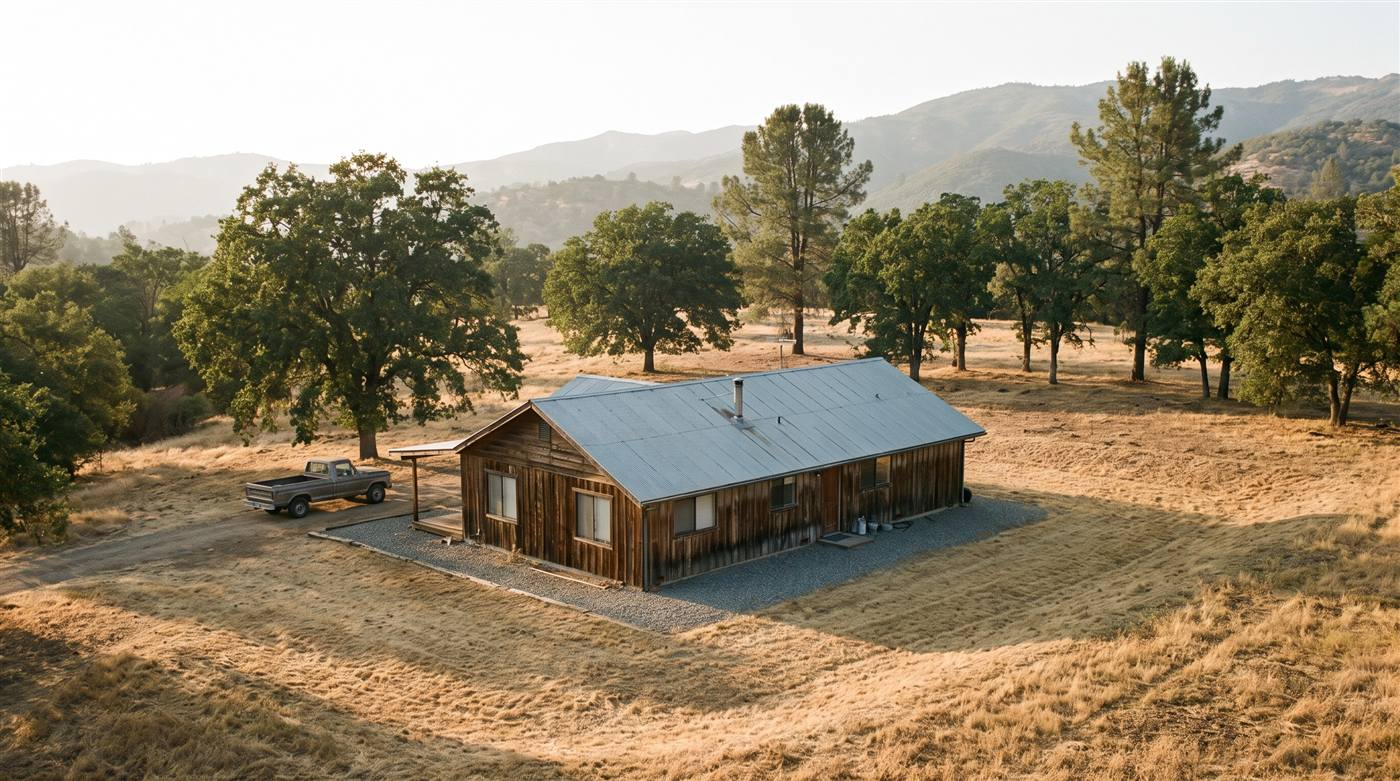
Wildfire Defensible Space: The Four Numbers That Matter
Why embers rather than flame fronts destroy most homes, how far they travel, and which five feet of your property matters most.
CARD 01
of wildfires are human caused — and equipment is one of the largest single contributors.
CAL FIRE, Ready for Wildfire
how far hot embers can travel in strong wind. The fire does not have to reach you.
USDA Forest Service
homes
lost to wildfire are ignited by flying embers, not by a wall of flame arriving.
USDA Forest Service
the zone that matters most, costs the least, and is the one people skip.
CAL FIRE Board of Forestry
Sources linked in full at the foot of this page. Free to reprint or embed with a link back.
miniexcavatorhq.com
01What you’re actually protecting
It is easy to treat this as a chore on a list. It is worth being clear about what is riding on it.
Your house
Most homes lost to wildfire aren’t taken by a wall of flame. They’re taken by embers — burning debris that lands in a gutter, a mulch bed, or a woodpile against the siding, and smoulders there until the house catches.
Your neighbours
Embers travel up to five miles on a strong wind. Your clearing protects the houses downwind of you, and theirs protects yours. That’s why Firewise is organised by neighbourhood rather than by household.
The crew that comes
Defensible space is also somewhere a fire crew can safely stand and work. A house with brush to the walls and no way out is a house engines may have to drive past, because nobody sends people into a place they can’t retreat from.
That last one lands hardest with people once they’ve heard it.
Clearing your hundred feet is not only about whether your house can survive on its own. It’s about whether anyone can defend it if it comes to that — and that decision gets made in seconds by somebody who has never seen your property before.
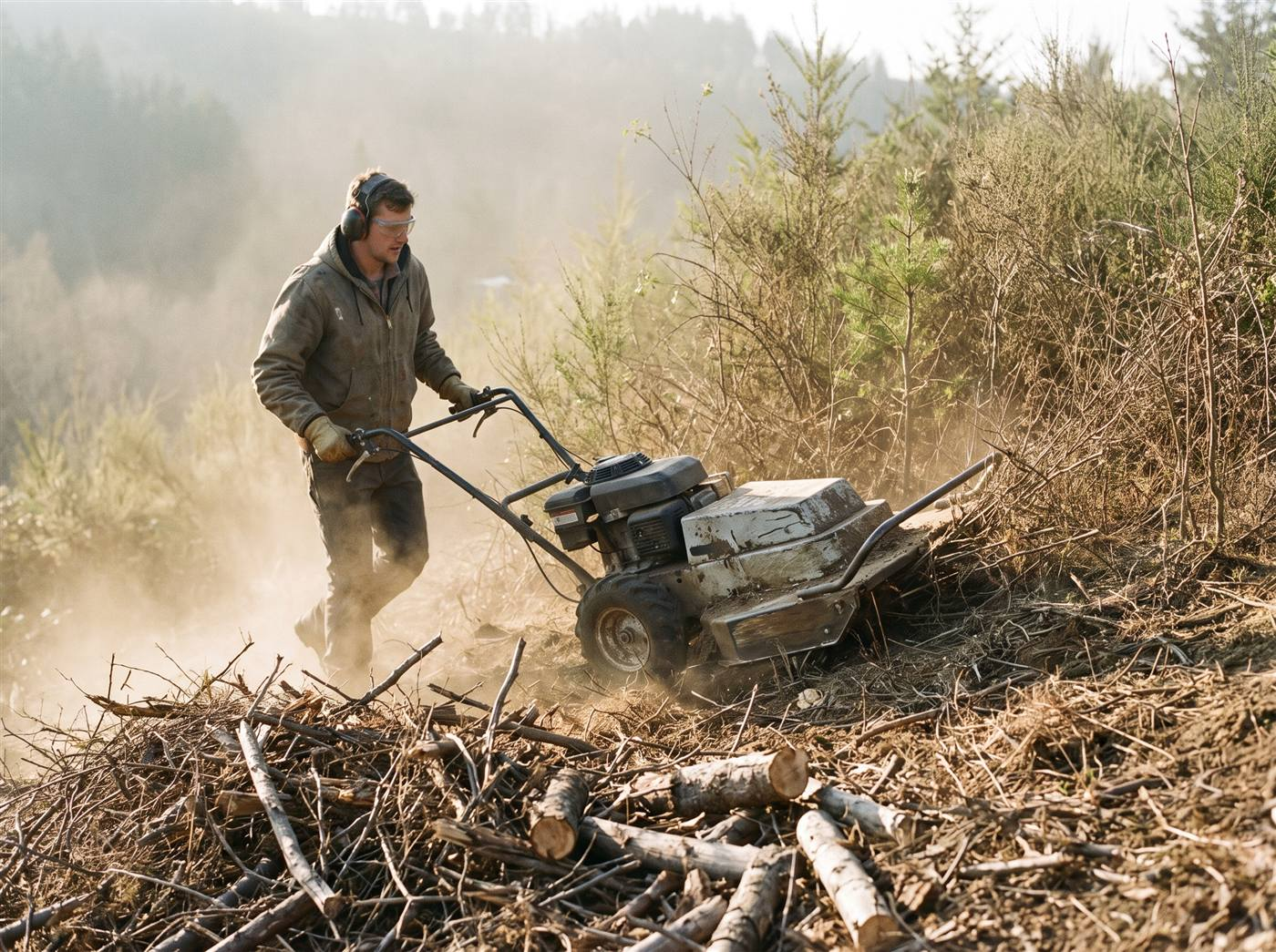
Grass and light weeds: a string trimmer, not a mower. Brush and saplings up to about two inches: a brush cutter or clearing saw. Thicker than that: a chainsaw, or a machine with a cutter head if you have acreage. Stumps and regrowth are the one job where a machine genuinely earns its place — and it’s usually a rental.
Work before 10 a.m., never on a hot windy day, and fit a spark arrester to everything with a gas engine. The single biggest mistake is running a lawn mower through dry vegetation. That isn’t clearing. That’s an ignition source with a seat on it.
02The work itself starts fires
This is left out of nearly every defensible space page, and it’s the part most likely to cost you the house.
Roughly 95% of wildfires are human caused, and equipment is one of the largest single contributors — mowers, trimmers, chainsaws, grinders, welders and tractors have all started them.
A lot of those fires were lit by somebody doing exactly what you’re planning this weekend: clearing brush to protect their home.
There’s a grim logic to how it happens to good, careful people.
You finally get out there on the hottest, driest, windiest stretch of the year, because that’s when the danger feels real enough to act on.
You take a machine with a hot exhaust and a spinning steel blade into cured grass. One hidden rock, one spark, and now it’s your fire — on your land, with your name on it, moving toward your neighbours.
How Brush Clearing Starts Wildfires
The three-step sequence behind equipment-caused wildfires, and how to prevent each step. Takes about four seconds.
CARD 02
The strike
A steel mower blade finds a rock buried in dry weeds. Mowers are built for lawns, where there are no rocks. Tall dead grass hides rocks, old fence wire and scrap metal.
The catch
One spark lands in cured fuel at low humidity. Dead grass in fire season takes an ember almost every time, and it does it faster than you can turn round.
The run
Fire climbs a slope considerably faster than it crosses flat ground. On most rural property, uphill from where you are working is where the house sits.
Walk the ground and pick up rocks and scrap metal before you cut · use a string trimmer instead of a mower in dry fuel, because the line does not spark · work before 10 a.m. while humidity is up and the wind is down · never on a red flag day · fit and clean the spark arrester · keep a shovel and a charged water extinguisher within reach.
Ignition-prevention guidance follows CAL FIRE, Ready for Wildfire equipment and vehicle use.
miniexcavatorhq.com
Never run a lawn mower through dry vegetation. A metal blade striking a buried rock throws a spark straight into cured fuel, and there is nothing you can do about it once it’s started. Use a string trimmer for dry grass and weeds — the line doesn’t spark.
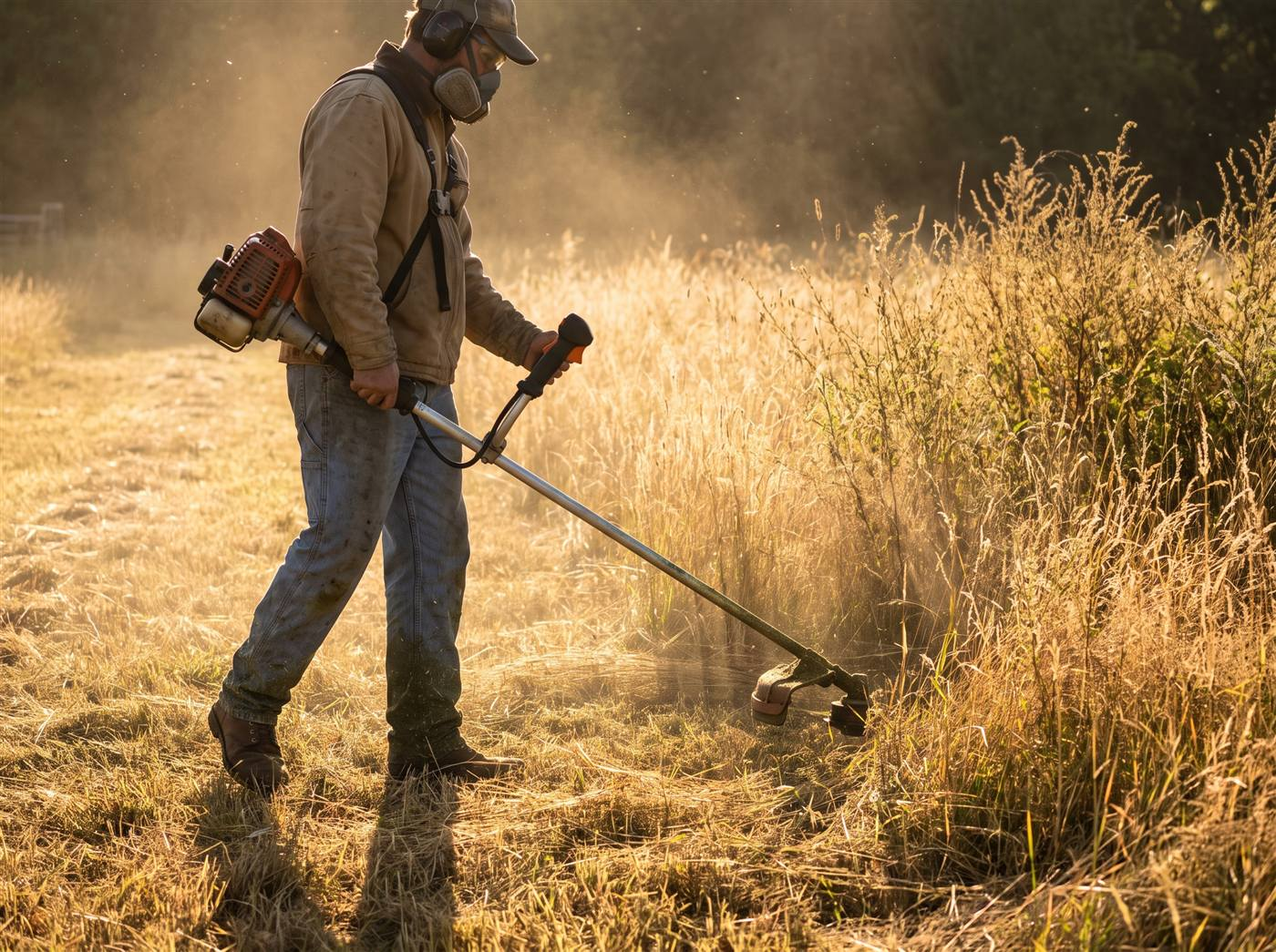
One more, and this one is law rather than advice. In wildland areas, spark arresters are required on all portable gasoline-powered equipment — chainsaws, trimmers, mowers, tractors. That’s a screen in the exhaust that stops carbon leaving as a live ember.
They clog over time and stop working, so they need cleaning rather than fitting once and forgetting.
03The three zones, and what they mean
California has the most clearly defined rules in the country and most other states have borrowed their shape.
The distances below follow CAL FIRE’s Board of Forestry standards. Your state may differ, so treat this as the structure rather than the statute.
Defensible Space Zones 0, 1 and 2 — What Clears Each One
An overhead plan of a rural property drawn to scale, showing what to clear at each distance from the house and which tool to use.
CARD 03
Zone distances follow CAL FIRE defensible space standards. Requirements vary by state — check your local fire authority.
miniexcavatorhq.com
The goal here isn’t flame, it’s embers — burning debris that lands on your house well ahead of any fire front, and which is what actually destroys most homes.
This is the part worth sitting with. A fire five miles away, on the far side of a ridge you cannot see over, can still put burning material on your roof. You do not have to be in the fire’s path to lose the house. You only have to be downwind of it.
Nothing in this band should be capable of catching and holding an ember.
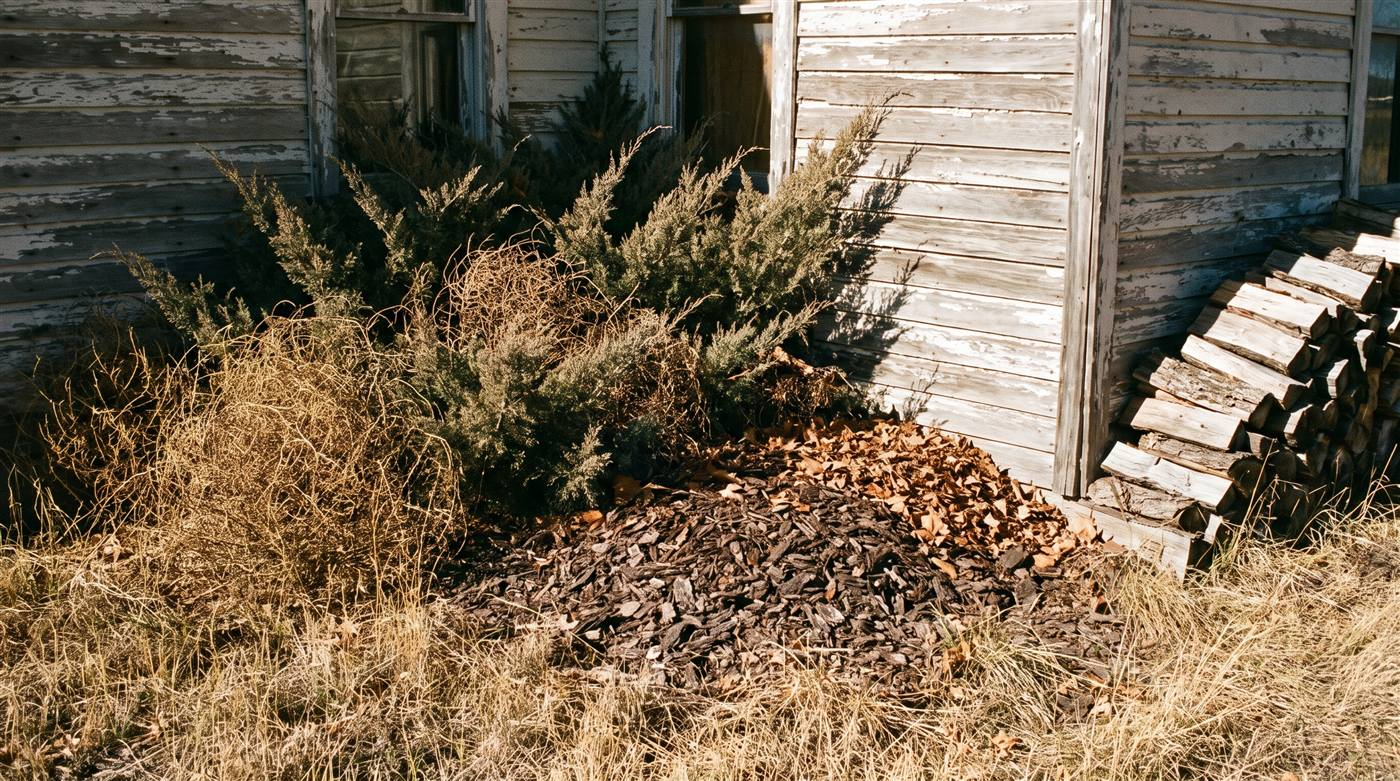
The bark mulch goes. The firewood stack goes. The juniper under the window goes, along with the leaves in the gutter and the corner where pine needles collect behind the downspout.
This is hand work. No machine helps you five feet from your own siding.
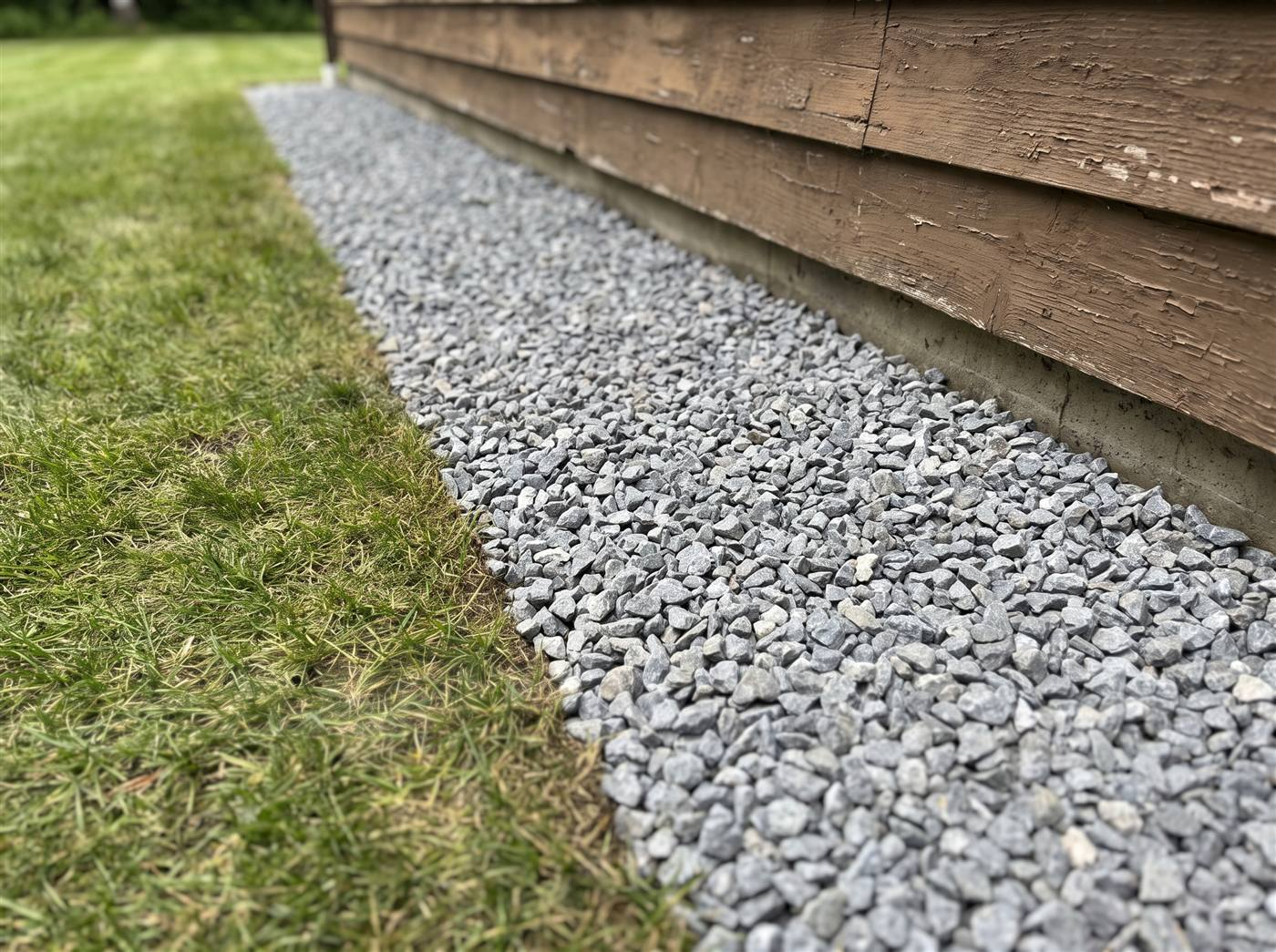
Worth knowing: Zone 0 is not yet legally required in California, unlike Zones 1 and 2. It is also the highest-value work on this page. Do it first.
Zone 1 — five to thirty feet
Lean, clean and green. Grass cut low, dead material removed, shrubs separated so fire can’t run between them, tree limbs pruned up off the ground and back from the roof.
String trimmer and loppers country, with a chainsaw for limbing. It’s close, fiddly work around structures, fences, propane tanks and vehicles — not the place for anything with momentum.
Bring a machine in here and you’re likelier to take out a water line than to save time.
Zone 2 — thirty to a hundred feet
This is the zone people get wrong in the other direction. It is not a clear-cut.
You are not trying to make bare dirt out to a hundred feet — that causes erosion, kills your shade and makes the place worse to live on. You’re breaking up continuity, so fire can’t step from one plant to the next.
Spacing depends on what’s growing and how steep it is: bigger plants need more space than small ones, and steeper ground needs more than flat.
If you’re weighing a machine for this, size is the decision that matters most and the one people most often get wrong. A machine that can’t reach the ground you need to treat is no use, and one too heavy for your slopes is worse than none — our breakdown of what the 1.4-ton class actually handles is the closest fit for most acreage clearing work.
Your local fire authority publishes spacing tables for your vegetation type, and they’re worth getting rather than guessing at.
04Matching the tool to what you’re cutting
Most equipment disappointment comes from asking a tool to do a job one size class above what it was built for.
The same principle applies whether you’re running a brush cutter or fitting any other attachment — capability is set by the machine feeding it, not by the tool’s own ambitions.
| What you’re cutting | The right tool | Honest notes |
|---|---|---|
| Dry grass & light weeds | String trimmer | The line won’t spark on rock, which is exactly why it beats a mower here. Slow over large areas, but safe. |
| Heavy weeds & light brush | Brush cutter head, or walk-behind brush mower | A metal blade cuts far faster and can spark. Clear rocks and scrap metal first, and work in the morning. |
| Brush & saplings to ~2″ | Clearing saw or walk-behind brush mower | The workhorse for most Zone 2 work on a normal property. Rents cheaply by the day. |
| Saplings 2–6″ | Chainsaw | Slow, but nothing else is as versatile. Chaps, eye and ear protection, spark arrester on the exhaust. |
| Standing trees | Chainsaw, or hire it | Anything near a structure, power line or fence is worth paying for. Felling is the fastest way to get badly hurt on this list. |
| Acreage of continuous brush | Machine with a brush cutter or mulcher head | Where a mini excavator or skid steer earns it. Almost always a rental unless you clear every year. |
| Stumps & regrowth | Mini excavator, or a stump grinder | The one job where a machine isn’t a luxury. Cut brush grows back; pulled brush doesn’t. |
Cutting brush off at ground level buys you a season or two. Most of what you’re fighting resprouts from the root crown and comes back thicker. If you want it to stay clear, the roots have to come out — and that, rather than speed or horsepower, is the honest argument for a machine on this job.
05Rent, buy, or hire
Nobody selling equipment will give you a straight answer on this, so here’s one.
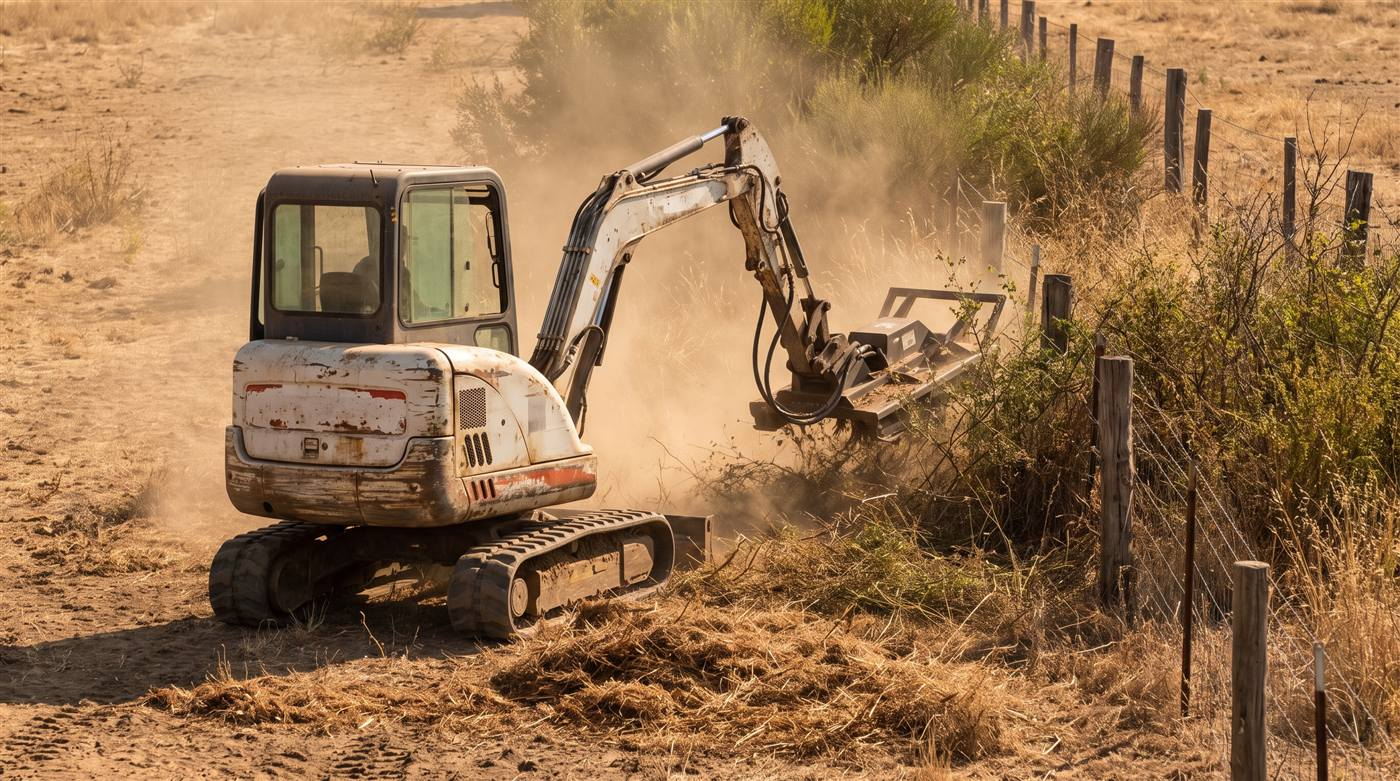
Rent if this is a one-off or every-few-years job, if you have less than about five acres to treat, or if you’ve never run the machine and the ground is steep. A weekend rental plus delivery is a few hundred dollars, and somebody else owns the maintenance, storage and depreciation.
Hire it out if the ground is steep, the work is near power lines or structures, there’s real standing timber, or you’d be learning to operate on the same day you’re working beside your own house.
Contractors clear in a day what takes a homeowner a month of weekends, and they carry insurance for the part that goes wrong.
Buy only if you’re treating the same acreage annually, you have other work for the machine the rest of the year, and somewhere to keep it.
Fire mitigation alone almost never justifies a purchase — it’s the seventh job on a list of ten that justifies it.
06The problem that makes people quit
Here’s the one nobody plans for — and it isn’t the cutting.
Hauling and disposal costs are among the top reasons homeowners skip clearance work altogether. You can clear an acre in a weekend and then stare at the pile for eight months.
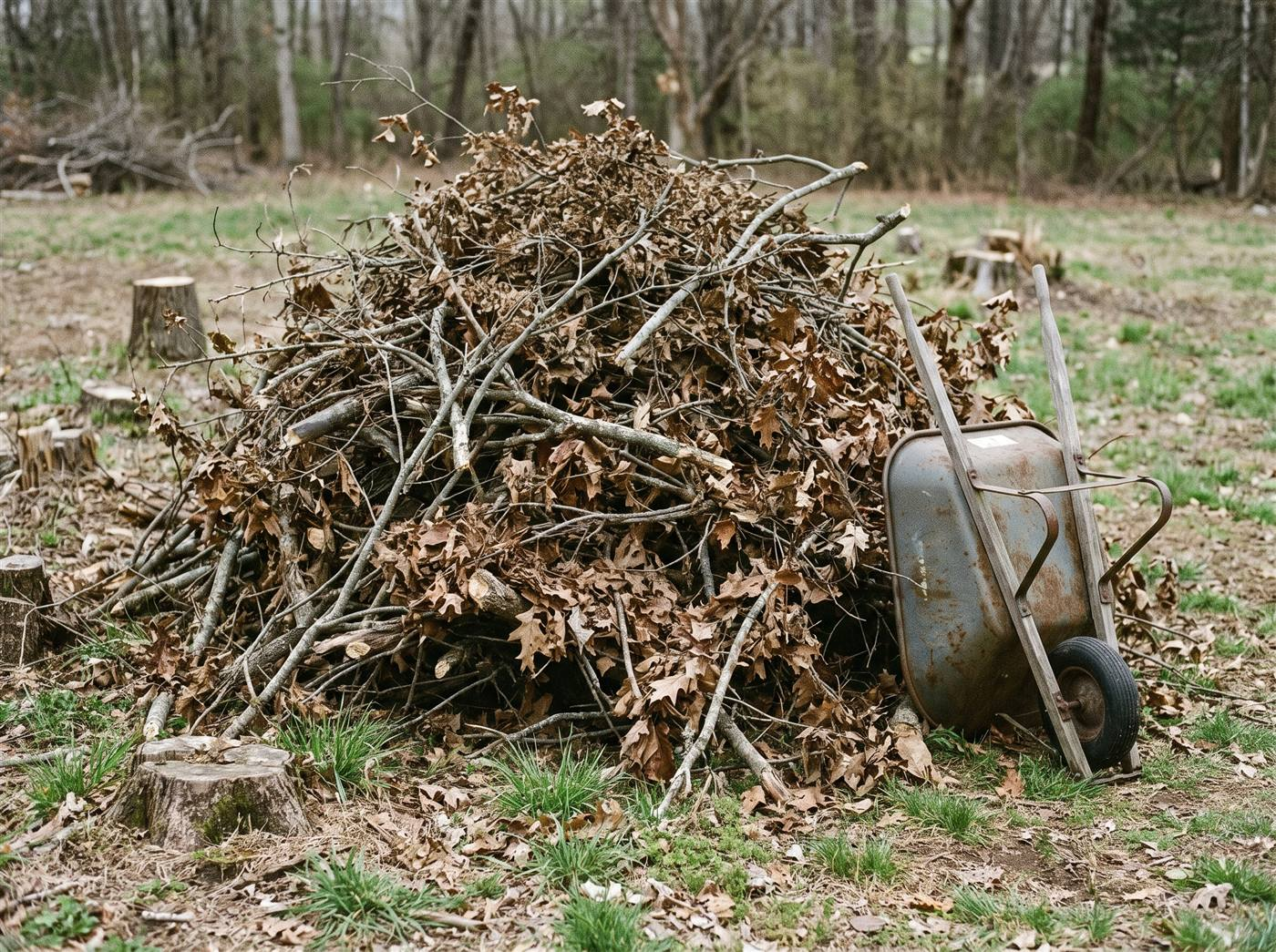
- Chipping. Rent a chipper, or better, find out whether your community runs a chipper day — many Firewise sites and fire districts organise them precisely because disposal is the bottleneck. Chips can go back down as ground cover, but never in Zone 0.
- Burning. Legal across much of rural America, but only with a permit and only inside your state’s window. Burn bans change daily in fire season — check the day you plan to burn, not the week before.
- Hauling to green waste. Costs money and a lot of trips. Price it against a chipper rental before committing.
- Lop and scatter. Cut material small and spread it thin so it contacts the ground and rots. Legitimate practice in outer Zone 2 — but thin means thin. A scattered pile is still a pile.
It’s the same lesson as any other property job: the sequence costs more than the labour.
07Slope, and knowing when to stop
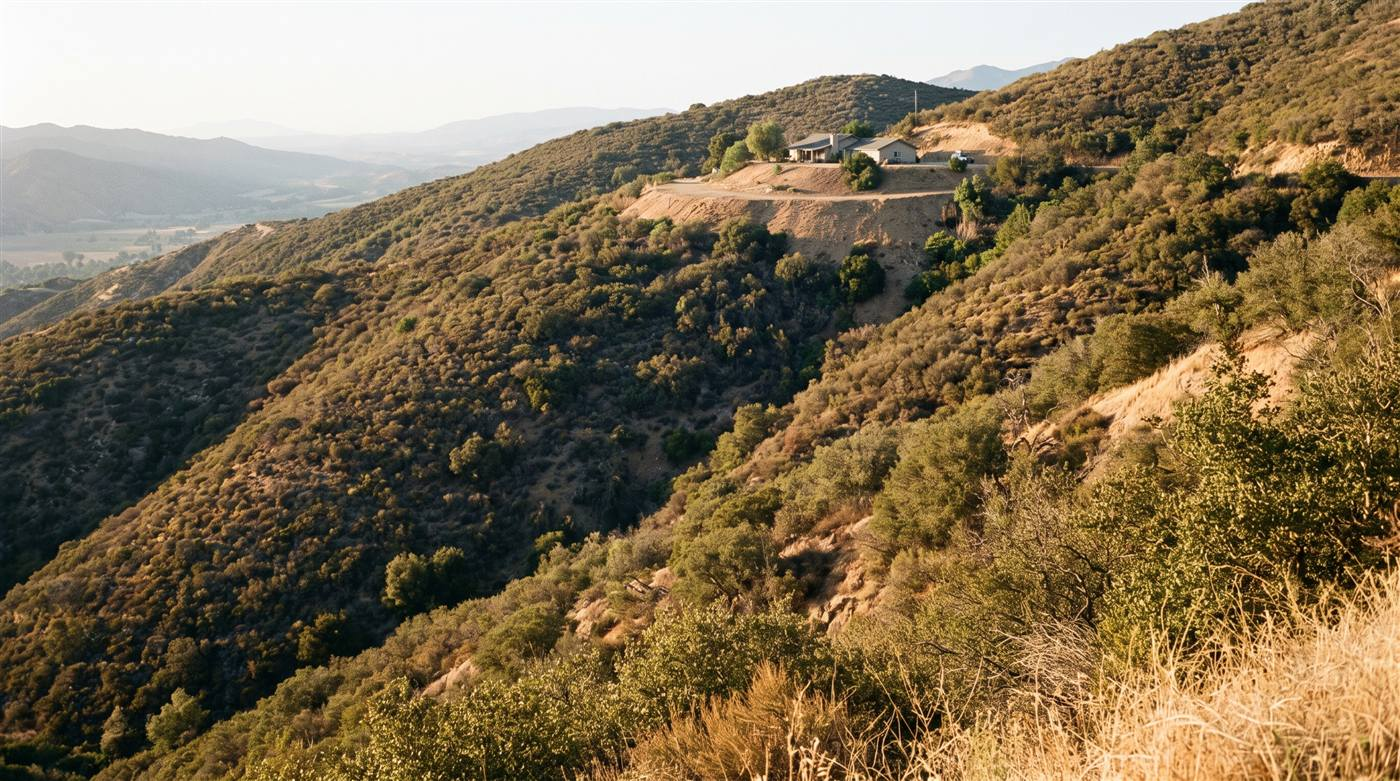
Slope turns this work dangerous in two directions at once. Fire moves uphill far faster than across flat ground, which is why spacing requirements tighten as the ground steepens — so the steepest part of your property is the part that most needs treating.
It’s also where machines roll. A brush mower or a mini excavator on a side slope, on loose ground, with an operator learning as they go, is a genuinely bad combination. Tracked machines are more stable than wheeled ones, but the failure mode when they do go is worse.
If a slope makes you uneasy, that instinct is doing its job. Hire that section and do the flat ground yourself. Nobody ever regretted paying somebody else to work the steep part.
08What I’d do, in order
- Zone 0 first, by hand, this weekend. Five feet around the house — mulch, firewood, dead plants, gutters. Costs a Saturday and it’s the highest-value work on the property.
- Then Zone 1, with a trimmer and loppers. Still no machine, still nearly free.
- Walk Zone 2 and count what’s actually there before renting anything. Acres of light brush is one tool; a dozen scattered saplings is a chainsaw and an afternoon.
- Sort out disposal before you cut a thing. Ring the fire district and ask about a chipper day.
- Rent before you buy, every time, until you’ve done it twice.
- Morning only, spark arrester fitted, shovel and a full water extinguisher on the truck, and never on a red flag day.
09When to do it
This isn’t a one-weekend job you finish. It’s a rhythm, and the seasons decide most of it.
The instinct is to do everything in high summer, when the danger feels real. That’s exactly backwards — summer is when the ground is driest, the equipment is most likely to start something, and the trees least want to be cut.
Defensible Space: What To Do In Each Season
When to cut trees, when to clear brush, and why doing it all in peak fire season is backwards.
CARD 04
Winter
Dormant season
- Best time for tree work. Removing hazardous trees and heavy underbrush, weather permitting.
- Limb up. Increase vertical clearance while the trees are dormant.
- Walk and assess. Dead and diseased trees are easiest to spot with the leaves down.
- Pests are least active now, so cuts are least likely to attract them.
Spring
Before it dries out
- The main clearing window. Clear dead vegetation and open up your buffer while fuel is still green.
- Deal with cut wood. Remove or cover it so it doesn’t draw beetles.
- Ground is damp, humidity is up — the lowest-risk time to run equipment.
- Good time to plant, if you’re planting.
Summer
Peak fire season
- Extreme caution with equipment. This is when the work itself starts fires.
- Morning only, and not on red flag days. No exceptions worth making.
- Keep removing dead trees, but this is maintenance, not the big push.
- Watch for pest activity, which peaks now.
Fall
Before the rains
- Second clearing window. Dead trees and dense underbrush, once the heat breaks.
- Clear the gutters and Zone 0 after leaf drop — this is when it fills up.
- Cooler temperatures and returning moisture make it the best planting time.
- Get the burn pile sorted while permits are available.
Seasonal guidance follows CAL FIRE, Ready for Wildfire seasonal actions. Timing shifts with your climate — ask your local fire authority.
miniexcavatorhq.com
As for how often: aggressive resprouting shrubs want re-treating every three to five years, faster on good growing ground. Grass and light fuel is annual. Zone 0 is more or less continuous — it’s a broom-and-gutter job, not a project.
If you end up running a machine on any of this, the maintenance rhythm matters as much as the clearing one. A cutter head works hard in abrasive material, and our servicing schedule for small machines covers what needs checking and how often. Worn rubber tracks on rough, sloping ground are the other thing that catches people out on this kind of work.
10Questions people ask next
The things that come up once somebody has actually walked their property and started counting.
Do I legally have to do this?
In California, Zones 1 and 2 are required by law — that’s the ground from five feet out to a hundred. Zone 0, the first five feet, is the highest-value work but is not yet legally required there.
Elsewhere it varies enormously. Some states mandate it in designated hazard areas, some counties enforce it, and plenty of places have no requirement at all. Your local fire authority is the only body that can tell you what actually applies to your parcel, and they will tell you for free.
Do I have to cut my trees down?
Almost certainly not. This is the single biggest misunderstanding about defensible space, and it stops a lot of people from starting.
Zone 2 is about spacing and separation, not removal. You’re breaking up the continuous path fire uses to travel — thinning where crowns touch, limbing up so ground fire can’t climb into the canopy, and clearing the dead material underneath. A mature, well-spaced, limbed-up tree with clear ground beneath it is not a liability. A thicket of small stuff growing into each other is.
Removal is for dead and diseased trees, and for the ones growing into the structure. Not for a healthy oak forty feet out.
What if my neighbour won’t do theirs?
Frustrating, and more common than you’d think. Two honest things to hold onto.
First, your own Zone 0 and Zone 1 still do most of the work. Whether an ember that lands on your property finds something to burn is decided within thirty feet of your walls, and that ground is entirely yours. Your neighbour’s overgrown lot raises your risk; it does not make your own work pointless.
Second, this is exactly the problem Fire Safe Councils and Firewise groups exist to solve. A neighbour who ignores a letter from you may well take part in a chipper day the whole street is doing. Going through the local group is usually more productive, and considerably less awkward, than going over the fence.
Can I get help paying for it, or someone to look at my place?
Often, yes, and this is the most under-used resource in the whole business. Many fire departments and Fire Safe Councils will walk your property with you at no charge and tell you specifically what to do — which beats any guide, this one included, because they’re looking at your actual ground.
Many also run chipper days, where the community shares the cost of disposal. Since hauling is the single biggest reason people abandon clearance work halfway through, that one is worth chasing before you cut anything.
Some councils administer grant programmes for larger fuel-reduction work too, particularly for older residents or properties in high-hazard areas. Ask — the money is frequently there and unclaimed.
How long does the work actually stay done?
Grass and light weeds are an annual job, sometimes twice in a wet year. Shrubs that resprout from the root crown want re-treating every three to five years, faster on good ground.
Zone 0 is continuous rather than periodic — gutters, the corner where needles collect, whatever has blown up against the siding. Ten minutes with a broom, regularly, does more for your house than a heroic weekend once every three years.
This is also the honest argument for pulling roots rather than cutting tops. Cut brush is back in two seasons. Pulled brush is gone.
Is a machine worth buying just for this?
Almost never, and we’d rather say so plainly than sell you something.
Fire mitigation on its own doesn’t justify the purchase, the trailer, the storage and the maintenance. Rent for a weekend, or hire the heavy clearing out, and put the difference into doing the work more often.
Owning starts to make sense when the machine has a list of other jobs waiting — drainage, a building pad, a driveway, fence posts, stumps. If you’re at that point anyway, our rundown of what these machines actually get used for on acreage is the honest version of that maths.
What about the burn pile — can I just burn it?
In much of rural America, yes, but only with a permit and only inside your state’s burn window. Both of those change, and burn bans move daily through fire season.
Check on the day you plan to burn, not the week before. Your state forestry agency or county fire district publishes the current status, and a pile that was legal on Tuesday can be an offence on Thursday.
If burning isn’t available to you, a chipper day is usually the cheapest alternative, and scattering thin in outer Zone 2 is legitimate for smaller material.
Sources
Zone definitions and distances follow the CAL FIRE Board of Forestry defensible space standards. Equipment and ignition-prevention guidance follows CAL FIRE’s Ready for Wildfire equipment and vehicle use programme. Community preparedness framing draws on the USDA Forest Service Fire Adapted Communities resources.
Requirements vary considerably by state and county.
Your local fire authority or state forestry agency has the rules that actually apply to you, and most will walk your property with you at no charge — which is worth more than any guide. This page is general information, not a substitute for that visit, and nothing here is engineering or legal advice.